School Days

Aged 10, 1976
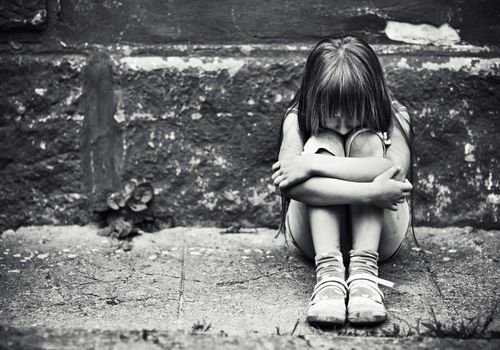
I am embarrassed by the intimacy and open friendship that he offers. I curl up inside, withdrawing emotionally because his honesty and innocence make me uncomfortable. I want to be kind and gentle towards him but it’s easier to be guarded; I don’t want to confront this conflict of feelings. His disability frightens and confuses me. His difference makes me feel scared and uncertain. His need of me is embarrassing. And yet, I want to relate to him and care for him.

He is the first disabled child I have ever met. I am 10 years old. I decide that this situation and the complex emotions it elicits are ones I want to avoid for the rest of my life. I don’t want to have to feel things for him or about him. I don’t want to meet him again. I don’t understand him or me. And yet I remember his name: Luke

At around the same time, I’m embroiled in a similar inner conflict in a mobile classroom in my primary school. I don’t know what makes this classmate different. No one talks about it and the word ‘remedial’ is not one I really understand.  He is one of us and yet set apart. I like him and feel drawn to include him in my life but I do not understand him or ‘feel’ like his friend.

Then the playing field changes. Someone starts to call him a name, ‘egg and chip face’. Not overly cruel but unkind and unnecessary. He becomes more isolated and separate as others pick up on this insult. I know he needs me to stick up for him and yet I’m frightened to go against the crowd. We’re all urged to use this nickname, but I know I don’t want to.

My stomach churns and I want to go to the safety of my home. I’m already ridiculed for my ‘puppy fat’ and confused by the different kind of attention my developing body is bringing. How can I join sides with a lad who is less able to fight off the taunts than me? To be seen as a friend and defender of this boy would surely weaken my position in the battles I encounter at school.

My decision is made. I cannot join the cruelty. I’m not as outspoken as I could have been and my defence of him is subtle; I quietly let him know that I am on his side and I choose to sit next to him in the classroom.

I stay in the role of shy protector until I never see him again. In September, I start at high school and he does not. I never know where he went or what happened to him. My adult self presumes that he went to a school more able to meet his needs, but my younger self worries that something dreadful has happened and that if I had been a better friend, I could have prevented it. I would have wanted there to be a better version of me in Joshua’s life.


Aged 16
There are jobs to be had in the local ‘home for the handicapped’. I already work in the old people’s home and enjoy the experience it gives me for a future career in nursing. It would be a logical step to gain additional experience in a different field. Two of my school friends work there and describe it as a lovely place.

I know this would be a good move, but it’s at this point I realise that I will never be able to work with people with mental disabilities. As I consider this possible job, everything in me revolts against the idea. I CANNOT do that. I will never be able do that. Don’t make me do that.

I never revisited this decision. For whatever reason, when I looked at the lives of those with disabilities, I felt confused, helpless and anxious. Strong feelings. I didn’t want to go there.

In 1999 we are told that our son will never live an independent life and that the syndrome he has will mean a life of severe and profound challenge. The reality of the situation hits me. God must have chosen the wrong person; I can’t be Josh’s mother. I had never wanted to work with children like Josh. I spent years avoiding the world we were now in. I loved my son, but as soon as we joined the community of special needs the old emotions and conflicts arose. This was not a place I was comfortable with and yet I was now centre stage.
Angel Man

The geneticist tested for Angelman Syndrome. Joshua had flapped his arms in a consultation and this had flagged up the possibility of this strangely name disorder.

Two months later, Josh was diagnosed. Previously known as ‘happy puppet syndrome’, few of the features of Angelman Syndrome were evident in him. Questions were raised by clinicians as to the accuracy of their testing. A retest was ordered. The result was the same.

In the absence of the internet, we were handed sheets of information and a phone number for support. It seemed that Josh’s chromosomes were more unusual than most cases and advice was woolly and vague.

I ventured to ask what this syndrome was comparable to. Would his ability be like that of a Down’s Syndrome child? I needed to know how normal a life he would live, not what he would be unable to do. On a scale of disability, Josh was down near the bottom. “However,” the kind Geneticist said, “don’t limit him by this diagnosis. Josh will do his own thing and achieve things you may never expect of him”.

We took our son home. Life shut down and the rest of the world was a stranger. The smile on his face and his happy demeanour didn’t penetrate the sadness that we felt. The fact that he was such a happy boy felt cruelly ironic. ‘At least he’s happy’ were words spoken too regularly by well meaning people. Despite his smile, our world had collapsed.

Sofas

I wait on the sofa for Joshua’s arrival. Every week I look forward to these moments; an opportunity to sit with my son in a place that he loves.

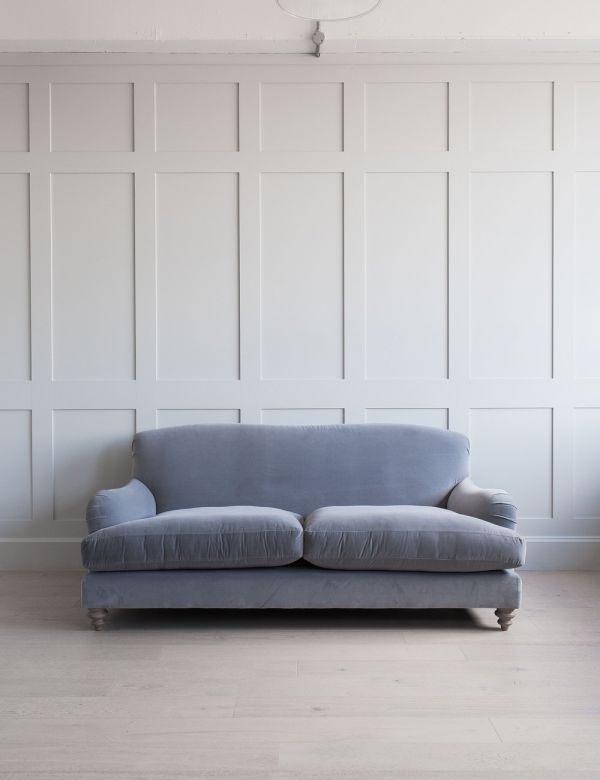
Joshua’s love of the comfortable life led to our church providing him with his own sofa. This is positioned amongst the less comfortable upright chairs. People are tempted to sit on the sofa yet everyone knows that this is Joshua’s sofa. The unwritten rule, which even visitors quickly grasp, is that you don’t sit here.

Sofas play a big part in Joshy’s life. He always prefers a sofa to a chair. The other day when we visited a potential service provider, he headed straight to the sofa. At home, when we watch TV, he presents his feet or head to me for a massage from the other end of the sofa.

A lady comes and sits on the church sofa. I explain that I’m waiting for Joshua and that he can be quite territorial. I envision her being evicted at a particularly poignant part of the service. She chooses to play it safe and moves away.

Still waiting, I continue to reflect on the importance of sofas to my adult son. I realise that it’s largely due to the fact that he is an incredibly sociable young man. He doesn’t want to sit by himself. He likes human touch and engagement and welcomes company – although he is selective. Though ‘non-verbal’, Josh has found many creative ways to communicate who he is and what he wants to say. A sofa is a ‘hello’ and a ‘come and talk with me’, ‘I’m interested in you‘, ‘You’re welcome here’. What nicer way to embrace the lives of others than to share your sofa with them. Yes, he likes people to be invited and does show favouritism. But he is generally happy to invite most people to sit down with him. Sharing a sofa with Josh is a good place to be.

Joshua’s entrance into the church building halts my reverie. His arrival is grand and ceremonial, like royalty. He waves and shouts ‘hiya’ to all that are present. He loudly seeks out his favourite people and I’m secretly happy that the word ‘mama’ is spoken the most. He takes no notice of the atmosphere in the room and is unperturbed by people who may be surprised by his entrance. He has arrived and he wants everyone to know. He is greeted warmly by his subjects!

I suppress laughter as I watch him; he never tires of this moment. He is a bit of an exhibitionist and likes to be noticed. I almost expect him to take a bow – something he will do when prompted. He walks to his sofa, flops down and takes a moment to decide who is going to sit next to him. Thankfully, I continue to be his chosen one and am rarely pushed off the throne.

He looks around and checks out his kingdom. Craning his neck he grins at people and glows with pleasure. He is excited to be here. These moments never cease to give him pleasure. His only concerns are regarding his lunch order and opportunities for a photo call with mothers and their babies after the service. It is important to him that we have these matters in hand before the music begins. The musicians play and we sign or play along with our virtual instruments.

Today there is a new treat in store. It is announced that there will be a new teaching series for the church. We will be looking at the Old Testament book of Joshua!! His hand goes up and he cries out with joy; “Who said my name? Here I am!”

Have they thought this through I wonder? Do they realise that for the next few weeks, a loud cry will be heard every time they mention my son’s namesake in their preaching? That to hear his name spoken through a microphone is the height of excitement for my son? At least everyone who teaches in this series can be assured of an enthusiastic response when they get up to speak. And for Joshua it will only confirm how important he is to us all.

Joshua brings life everywhere that he goes. He enhances every moment and shares his enjoyment willingly with others. He never fails to react or respond to the endless things that make him happy. Everyone needs a Joshua to remind them of the wonder of life. And Joshua needs a sofa to spread his message.

Picnic in the Square

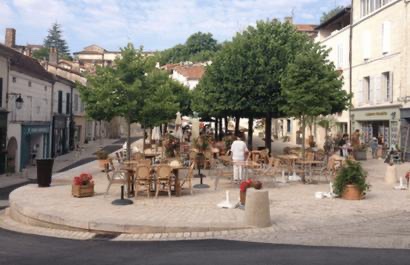
What could be nicer than a picnic in an idyllic French village? We sat down at the end of a long wooden table in the village square. The locals were warm and friendly. Stalls sold local produce and an increasing numbers of families arrived to enjoy what was fast becoming a communal lunch.

The picnic I’d hastily thrown together that morning was unimaginative. We livened it up with some fresh pastries from the stalls but all knew that our lunch was shabby in comparison to what other families were tucking into.

On reflection, remaining at what was fast becoming a food festival was probably a mistake. So bowled over were we by the occasion and atmosphere, we forgot what type of family ours was. Josh’s limited capacity for socialising, the midday sun and the scent of food were a recipe for disaster.

A French family came and sat next to us. Our soggy sandwiches seemed even less appealing now that their bottomless cool box had arrived, filled with delights which left my children faint with admiration. Josh was mesmerised.

Symptomatic of Angelman’s, Joshua constantly dribbled and always had a wet chin and mouth. On this occasion he drooled. Copiously. Every mouthful the neighbouring family took and every item they brought out of their box made him salivate more; drool ran down his chin and onto his clothes. The sandwich that he’d just eaten, coupled with a chocolate bar, gave his saliva a brown hue. For those who’d not yet shared a meal with Josh – and for some who had – this was somewhat off putting. However, our new neighbours seemed unperturbed. I relaxed.

Never lower your guard is a mantra that should be adopted by parents of children with Angelman’s Syndrome. Olli and Sam began to argue and Andy and I both turned our attention to them. Meanwhile, Joshua shuffled closer to the family next door and reached his hand into their cool box with characteristic speed. We turned back to see our 8 year old chewing on a chicken leg and a couple of cakes.

My memory plays back in slow motion. Andy’s arm reaching out to stop Josh from taking any more food….Josh’s screams of objection filling the afternoon air….cake and chicken spluttering from his mouth and splattering the table and our neighbours…. faces frozen in horror. We had become actors on a stage and the village was the audience.

Whilst Andy struggled to get Josh into his buggy, one final attempt for food was made and drinks were knocked over the whole family. Oblivious to it all, Olli continued to tell us what Samuel had done wrong whilst Samuel, at 18 months, didn’t care less. We exited.

I still remember the mother’s face. It’s fixed in my mind, just as it remained fixed as we left the once peaceful French square. As I recount this, I wonder whether there is a French family who tell the story of that communal lunch. Remembering the mad English family and the son who pinched their picnic one summer’s day.

Borders

A constant challenge in our family life was to find an activity that we could all enjoy together. I fervently sought out places we could visit where all three boys would have their developmental needs, likes and dislikes, met.

One memorable day, I put them all into the car and set off for Borders. My plan was to spend time amongst the children’s books before drinks and cake in the cafe. Past experience had shown me that Josh would manage about 15 minutes in the book department as long as he knew a cake would follow. This was long enough for all three to choose a book.

Things began well. The car journey was calm and we were able to park close to the store. We didn’t enter Borders quietly; the younger boys were prone to hyper chat when excited and Joshua was prone to shouting. As our presence was duly noted by staff and customers, I realised that to reach the books we needed to pass the stairs and the stairs led up to the cafe. My strategy was fatally flawed.

The approach to the back of the store was immediately foiled by Joshua’s dash for the central staircase. I called. He responded by sitting down on the 4th step and refusing to move. He was loud. He was angry. He was in control. I didn’t want him to get his own way but the volume of his protests and the attention it drew made it too difficult for me. I hurried all three boys upstairs and joined the queue for drink and cake.

I reassured the younger two that books would follow and explained to Josh that we would eat now and THEN look at books. As I reiterated this, he angrily pulled the hair of the lady in front and shouted a bit more for good measure.

Peace descended and we sat and ate our cake. I successfully stopped Josh from pinching cakes off neighbouring tables and we were soon able to return to the ground floor for books.

Oliver’s love of books meant that each one he picked up had to be discussed enthusiastically. He told me how and when he’d seen this book and where it was in the school library. “Oh my goodness, there are more books around this corner Mummy!” I tried to show interest without betraying my frayed nerves. Samuel was happy to follow Olli but Josh refused to stay with us, determined to go back upstairs again to sample more cakes.

I attempted to keep him in the children’s section by singing silly songs. I then encouraged him into the cookery section so we could look at his favourite foods. Anything to buy time. Finally, as calmly as I could, I suggested to Olli and Sam that they choose their book so we could leave. They dutifully did as I asked whilst I continued to do battle with Josh.

What I’d failed to realise was that Josh was still only performing in Act 1 of the play we were in. As we walked to the tills, he sunk to the ground and began to scream. I tried to get him to stand up using all the ‘tricks of the trade’. But he wouldn’t. He wanted to go upstairs for another cake and wasn’t going to move. I wasn’t going to let him: we were in a standoff.

I stepped away, ignoring what he was doing and watching the other two boys whilst they paid for their books. Olli appeared unaffected but Samuel looked terrified.

Josh upped the ante and began to hit passers-by. He pulled books off the shelves and flung them across the floor. Offers of help by customers or staff were rewarded by a swift kick to the shin. He was out of control. All I could do was wait it out.

I avoided eye contact hoping to defuse the situation. The tantrum continued for an unbearably long time. Finally he calmed and crawled to a cookery book. As he sat on the floor looking at it, I walked over, sat down and asked whether he would like to buy this book. He did.

The relief I felt as I excited the store was short lived. Josh sat on the rubber mats next to the sliding doors and once again refused to move. Customers were forced to walk round him if they wished to enter the shop unscathed. The automatic doors took on a life of their own once Joshua realised that his movements would affect them.

I sent the other two boys to the car and stood and waited. After 20 minutes, I threw out all known parenting advice and told Josh that I would go home without him if he didn’t come with me. This empty threat coupled with my walking to the car and starting the engine surprisingly worked. Not my proudest moment but successful. He got up and got into the car.

As I sat and recovered, I heard a small sniffle coming from the back seat. I turned round, anticipating the crying to be about the ruined trip; wondering how I could bring comfort. However, Oliver looked at me with his big blue eyes and anxiously asked “You weren’t really going to leave him behind were you mum?”

Open Spaces

The early years of Joshua’s life were immensely sad and painful, seemingly absent of hope. Nothing else compares to those grief filled early days that were full of uncertainty. However, as I read what I’ve written, I regret that I may have portrayed Joshua’s life as a negative, rather than ascribe significance and beauty to it.

Our story, though full of challenges, has also been enriched because of Joshua. What would I do and who would I be without him? He is laughter and love, an exclamation mark in the middle of a day.

Now, 20 years later, I choose to escape to be with him. One may imagine that this is solely for his benefit but in truth, he’s become a source of respite for me. When I am with him, I am drawn into a different rhythm and my own pace softens and slows; I am the child and he is the adult and I learn from him.

Who could have foreseen such a change in dynamic? In the beginning, it was impossible to conceive that my journey may result in good. I held back from walking on the path laid before me, fearing that it would destroy me. I was incapable of knowing what steps to take and relied on others to help and guide me. I cried until there were no more tears. My faith in God was weak and fractured.

However, the road did open up in front of me and it became familiar ground. The journey hasn’t been easy and I have known dark times. But I now find myself in open spaces; free to look behind without regret and forward with expectancy.

Early years

We found ourselves in the child development centre of our local hospital. The outcome of a two day investigation. “Global development delay”. Cause unknown.

A blizzard of clinical appointments and investigations followed. Every part of his body was measured and examined. Every detail of his life, explored. Was the cowlick in his hair a sign? The birthmark on his back an indicator? I was exhausted on every level. Each day was a challenge, made harder by lack of sleep.

Three times a week we attended a clinic where caring professionals helped Josh and me with his development. We all sat in a room and sang songs designed to encourage movement and response from our disinterested children. I took secret pride in the fact that my son seemed more able than others in the group and hoped that this was a sign that he would ‘catch up’. To me, he looked and felt normal.

Initially reluctant to join in with these sessions, I slowly realised that this was the place where we fitted. Every part of me resisted the world we found ourselves in but Joshua’s ‘lack of ability’ had become more pronounced in toddler groups. Conversations about what our children were ‘achieving’ were painful and awkward for me. But at the clinic, amongst others like us, I was able to relax. There was no bench mark that we were expected to reach. Every slow and small step our children made was celebrated; the accompanying sadness understood. A bond formed due to our mutual distress and circumstances. Care was apportioned to each of us as we awaited results and navigated our way through this new life.

At the end of this time a diagnosis was found for Josh. Though some might think this a relief, it was actually a bitter blow. At that moment our hope for his recovery was taken away and his life was mapped out. “Your son will never live independently”.

A Doctor Calls

At six months old, Josh sat up but showed no interest in the toys that surrounded him. At eight months, he passed the health visitor’s checks with flying colours but I left the clinic in tears; furious with myself for not voicing my concerns. The secret fears grew.

At 10 months old, a doctor visited our home. We welcomed her into the house even though she wasn’t wanted. She brought her bag and stern demeanour. Josh sat and smiled.

We spent 90 minutes willing him to do as she wanted; interjecting with ‘he did that yesterday’ comments. We asked her what she’d found. She answered with developmental age versus actual age. Comparisons of what he was doing and what he should be doing. Too much to take in and too little time to process.

“Your son will never live independently”. Words spoken professionally, without empathy as she turned away.

I don’t remember what else was said. I don’t recall her leaving. I sat on the bottom stair and held Joshua tightly. willing myself to protect him from this damning prognosis. This could not be his life. Nor ours .

School Days

Aged 10, 1976
I am embarrassed by the intimacy and open friendship that he offers. I curl up inside, withdrawing emotionally because his honesty and innocence make me uncomfortable. I want to be kind and gentle towards him but it’s easier to be guarded; I don’t want to confront this conflict of feelings. His disability frightens and confuses me. His difference makes me feel scared and uncertain. His need of me is embarrassing. And yet, I want to relate to him and care for him.

He is the first disabled child I have ever met. I am 10 years old. I decide that this situation and the complex emotions it elicits are ones I want to avoid for the rest of my life. I don’t want to have to feel things for him or about him. I don’t want to meet him again. I don’t understand him or me. And yet I remember his name: Luke

At around the same time, I’m embroiled in a similar inner conflict in a mobile classroom in my primary school. I don’t know what makes this classmate different. No one talks about it and the word ‘remedial’ is not one I really understand.  He is one of us and yet set apart. I like him and feel drawn to include him in my life but I do not understood him or ‘feel’ like his friend.

Then the playing field changes. Someone starts to call him a name, ‘egg and chip face’. Not overly cruel but unkind and unnecessary. He becomes more isolated and separate as others pick up on this insult. I know he needs me to stick up for him and yet I’m frightened to go against the crowd. We’re all urged to use this nickname, but I know I don’t want to.

My stomach churns and I want to go to the safety of my home. I’m already ridiculed for my ‘puppy fat’ and confused by the different kind of attention my developing body is bringing. How can I join sides with a lad who is less able to fight off the taunts than me? To be seen as a friend and defender of this boy would surely weaken my position in the battles I encounter at school.

My decision is made. I cannot join the cruelty. I’m not as outspoken as I could have been and my defence of him is subtle; I quietly let him know that I am on his side and I choose to sit next to him in the classroom.

I stay in the role of shy protector until I never see him again. In September, I start at high school and he does not. I never know where he went or what happened to him. My adult self presumes that he went to a school more able to meet his needs, but my younger self worries that something dreadful has happened and that if I had been a better friend, I could have prevented it. I would have wanted there to be a better version of me in Joshua’s life.


Aged 16
There are jobs to be had in the local ‘home for the handicapped’. I already work in the old people’s home and enjoy the experience it gives me for a future career in nursing. It would be a logical step to gain additional experience in a different field. Two of my school friends work there and describe it as a lovely place.

I know this would be a good move, but it’s at this point I realise that I will never be able to work with people with mental disabilities. As I consider this possible job, everything in me revolts against the idea. I CANNOT do that. I will never be able do that. Don’t make me do that.

I never revisited this decision. For whatever reason, when I looked at the lives of those with disabilities, I felt confused, helpless and anxious. Strong feelings. I didn’t want to go there.

In 1999 we are told that our son will never live an independent life and that the syndrome he has will mean a life of severe and profound challenge. The reality of the situation hits me. God must have chosen the wrong person; I can’t be Josh’s mother. I had never wanted to work with children like Josh. I spent years avoiding the world we were now in. I loved my son, but as soon as we joined the community of special needs the old emotions and conflicts arose. This was not a place I was comfortable with and yet I was now centre stage.